Specialized Products for Cell-Based Research
STEMCELL Technologies develops specialized cell culture media, cell separation systems, instruments, assays and accessory reagents for life science research. Its products support complete experimental workflows, from cell isolation and culture to differentiation, characterization and storage.
The company has particular expertise in stem cell biology, hematology, immunology, organoid research and regenerative medicine. Researchers also use its products in cancer biology, neuroscience, cell therapy development and infectious disease research.
STEMCELL Technologies designs many products as part of integrated workflows. This approach helps laboratories select compatible media, supplements, separation reagents and protocols for specific cell types.
Cell Separation with EasySep
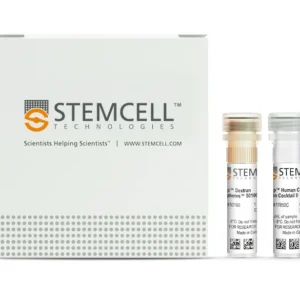
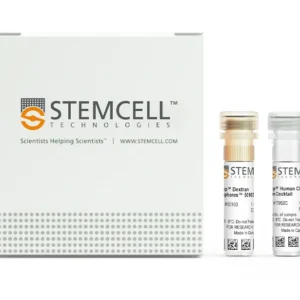
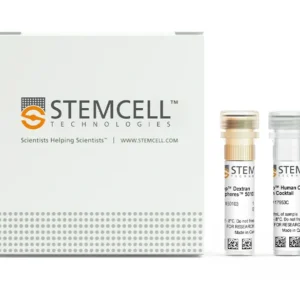
EasySep™ products use immunomagnetic technology to isolate specific cell populations from heterogeneous samples. Available workflows support positive selection, negative selection and cell depletion.
Researchers can isolate immune cells, hematopoietic progenitors, tumor cells and other cell populations from blood, bone marrow and tissue samples. Common target populations include:
- T cells
- B cells
- Natural killer cells
- Monocytes
- Dendritic cells
- Granulocytes
- Stem and progenitor cells
- Circulating tumor cells
Negative selection removes unwanted cells while leaving the target cells unlabeled. This method is useful when researchers want minimally manipulated cells for functional studies.
Positive selection directly labels and captures the target population. It can provide an efficient option when the downstream workflow permits labeled cells.
Researchers should select a kit according to species, sample source, target population and desired isolation method.
RoboSep Automated Cell Separation
RoboSep™ instruments automate immunomagnetic cell separation with minimal manual handling. The systems use EasySep reagents and can process multiple samples or cell types.
Automation can improve workflow consistency and reduce hands-on time. It can also help laboratories manage higher sample volumes without placing cells inside a permanently dedicated fluid path.
RoboSep instruments are useful in immunology, hematology, cell therapy research and core laboratory settings. Instrument capacity and compatible kits should be reviewed before purchase.
Pluripotent Stem Cell Culture
STEMCELL Technologies offers media and reagents for human embryonic stem cells and induced pluripotent stem cells.
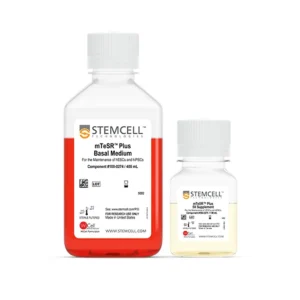
The TeSR™ family supports the maintenance and expansion of human pluripotent stem cells. Different formulations address requirements such as feeder-free culture, defined conditions and scalable expansion.
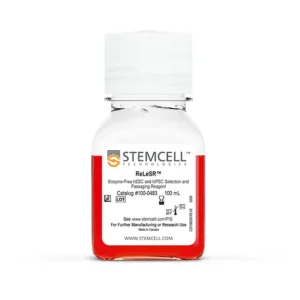
ReLeSR™ provides selective, enzyme-free passaging of undifferentiated human pluripotent stem cell colonies. It can reduce manual colony selection and simplify routine culture.
Other workflow products support:
- Cell thawing and recovery
- Colony passaging
- Single-cell culture
- Cryopreservation
- Pluripotency assessment
- Differentiation
- Three-dimensional suspension culture
Pluripotent stem cells require consistent culture conditions. Researchers should monitor morphology, differentiation and genomic stability throughout long-term culture.
STEMdiff Differentiation Systems
STEMdiff™ products provide standardized protocols and media for differentiating human pluripotent stem cells into specialized cell types.
Available workflows support selected hematopoietic, neural, cardiac, pancreatic, intestinal and other lineages. These products help researchers reduce the variability associated with preparing complex differentiation media in-house.
Researchers can use differentiated cells in disease modeling, drug screening, developmental biology and regenerative medicine research.
Differentiation efficiency depends on cell line quality, passage history and starting confluency. Laboratories should establish suitable quality-control criteria before beginning large experiments.
Hematopoietic Stem and Progenitor Cell Research
STEMCELL Technologies has a long history in hematopoietic stem and progenitor cell research. Its products support cell isolation, expansion, differentiation and colony-forming unit assays.
Researchers can enrich CD34-positive cells from cord blood, bone marrow and mobilized peripheral blood. Specialized media then support selected expansion or differentiation workflows.
Applications include:
- Hematopoietic development
- Leukemia research
- Bone marrow biology
- Gene editing
- Cell therapy development
- Hematopoietic toxicity testing
- Colony-forming unit assays
Researchers should confirm the sample source and required cell population before selecting an isolation kit or culture medium.
MethoCult Colony-Forming Unit Assays
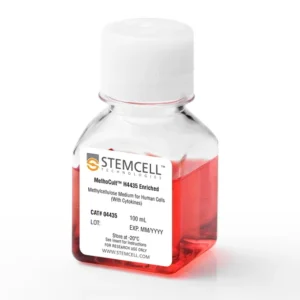
MethoCult™ is a family of semi-solid media for hematopoietic colony-forming unit assays.
Researchers use these products to detect and quantify hematopoietic progenitor cells. Applications include basic hematology research, stem cell characterization and evaluation of hematopoietic cell products.
Different MethoCult formulations support human or animal cells and specific colony types. Some products contain defined cytokines, while others require researchers to add selected growth factors.
The correct formulation depends on the species, sample source and experimental purpose. Buyers should check the exact catalog number because similarly named MethoCult products can have different compositions.
Immune Cell Culture
STEMCELL Technologies supplies media, cytokines and accessory reagents for culturing immune cells.
Products support T-cell, B-cell, natural killer cell, monocyte, macrophage and dendritic cell workflows. Researchers can use them for activation, expansion, differentiation and functional assays.
Immune cell performance depends on sample quality and culture conditions. Researchers should control cell density, cytokine concentration and stimulation time.
Cell separation and culture products from the same workflow can simplify the transition from sample preparation to functional analysis.
Cancer and Tumor Cell Research
STEMCELL Technologies products support cancer stem cell research, tumor cell isolation and functional cancer assays.
Researchers can use cell separation reagents to enrich tumor-associated populations or immune cells. Specialized media can support selected tumor cells, spheroids and organoid models.
Three-dimensional models provide additional information about cell organization and treatment response. They can complement conventional two-dimensional cell culture.
Tumor samples vary between patients and tissue sources. Researchers may need to optimize dissociation, enrichment and culture conditions for each model.
Organoid Culture
STEMCELL Technologies offers specialized media for generating, expanding and differentiating organoids.
Organoids reproduce selected structural and functional features of human or animal tissues. Researchers use them in developmental biology, disease modeling, drug discovery and toxicity studies.
Major organoid research areas include:
- Intestinal organoids
- Hepatic organoids
- Pancreatic organoids
- Pulmonary organoids
- Kidney organoids
- Prostate organoids
- Cerebral organoids
- Tumor organoids
Organoid workflows usually require tissue dissociation, extracellular matrix support, defined culture media and careful passaging. The correct medium depends on species, tissue source and whether the model originates from adult stem cells or pluripotent stem cells.
IntestiCult Organoid Media
IntestiCult™ products support the growth and maintenance of intestinal organoids.
Researchers can establish intestinal epithelial models from selected human or animal tissues. These systems support studies of epithelial biology, intestinal disease, host–pathogen interactions and drug response.
Researchers should select the correct formulation for species and sample type. Human and mouse intestinal organoid workflows may use different media and protocols.
HepatiCult Organoid Media
HepatiCult™ products support the establishment and maintenance of hepatic organoids.
Hepatic organoids provide three-dimensional models for studying liver epithelial biology, regeneration and disease. Researchers can also use them in selected toxicity and drug development applications.
The growth and differentiation stages may require different media. Researchers should follow the protocol associated with the exact product formulation.
Neural Stem Cells and Neuroscience Research
NeuroCult™ products support the culture, proliferation and differentiation of neural stem and progenitor cells.
Available products cover selected human, mouse and rat neural workflows. Researchers use them to investigate neurodevelopment, neural differentiation, brain injury and neurological disease.
STEMCELL Technologies also supplies tissue dissociation reagents and pluripotent stem cell differentiation media for neuroscience applications.
Neural cells can be sensitive to dissociation and culture conditions. Researchers should maintain consistent passage methods and avoid unnecessary mechanical stress.
Mesenchymal Stromal Cell Research
Products for mesenchymal stromal cell research support cell isolation, expansion, differentiation and characterization.
Researchers use mesenchymal cells to study bone, cartilage, adipose tissue, immunomodulation and regenerative medicine.
Culture conditions can influence cell identity and function. Laboratories should control passage number, seeding density and medium formulation.
Primary Cell and Tissue Processing
STEMCELL Technologies supplies density gradient media, tissue dissociation products, buffers and specialized cell isolation reagents.
These products help researchers prepare cell suspensions from blood, bone marrow and solid tissues. Consistent sample preparation improves the reliability of downstream separation and culture.
The correct processing method depends on tissue type, sample condition and target cells. Excessive enzymatic or mechanical treatment can reduce viability and damage surface markers.
Cell Culture Media and Supplements
The company offers specialized media for stem cells, immune cells, hematopoietic cells, epithelial cells and other research models.
Many formulations provide ready-to-use alternatives to manually prepared media. This can reduce reagent variation and preparation errors.
Available options may include serum-free, chemically defined or animal component-free formulations. Researchers should review the exact product description because these terms are not interchangeable.
Cytokines and Recombinant Proteins
STEMCELL Technologies supplies cytokines, growth factors and recombinant proteins for cell culture and differentiation.
These proteins support immune cell expansion, hematopoietic culture, stem cell maintenance and lineage-specific differentiation.
Biological activity, carrier proteins and formulation can affect performance. Researchers should use the concentration recommended for the relevant workflow.
Cell Storage and Cryopreservation
Cryopreservation products help laboratories store stem cells, primary cells and other sensitive cell types.
A suitable freezing medium can improve post-thaw viability and recovery. Controlled cooling and correct storage temperatures remain important parts of the process.
Researchers should validate recovery, phenotype and function after thawing. Viability alone may not confirm that the cells retain their expected biological properties.
Cell Characterization and Functional Assays
STEMCELL Technologies supplies reagents for cell identification, viability analysis and functional testing.
The portfolio includes antibodies, detection kits, enzyme-linked immunosorbent assays and enzyme-linked immunospot assays. Researchers can use these products to evaluate phenotype, cytokine secretion, proliferation and differentiation.
Assay selection should match the expected cell population and biological endpoint. Appropriate controls improve interpretation.
Popular STEMCELL Technologies Product Families
- EasySep™ cell separation products
- RoboSep™ automated cell separators
- TeSR™ pluripotent stem cell media
- mTeSR™ maintenance media
- STEMdiff™ differentiation kits
- ReLeSR™ passaging reagent
- MethoCult™ hematopoietic colony assay media
- NeuroCult™ neural stem cell media
- IntestiCult™ intestinal organoid media
- HepatiCult™ hepatic organoid media
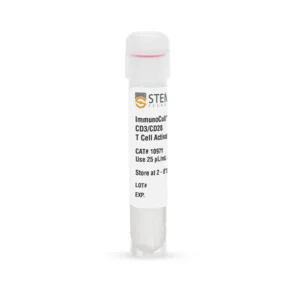
- ImmunoCult™ immune cell culture products
- StemSpan™ hematopoietic cell culture media
- ClonaCell™ hybridoma and cloning media
- MesenCult™ mesenchymal cell culture products
- ALDEFLUOR™ stem and progenitor cell detection reagent
- Lymphoprep™ density gradient medium
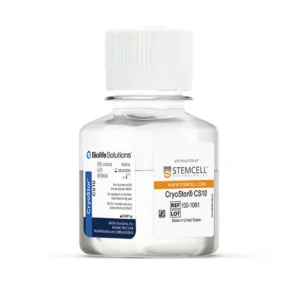
- CryoStor™ cell cryopreservation media
- Cytokines and recombinant proteins
- Cell characterization assays
- Tissue dissociation reagents
Research Applications
STEMCELL Technologies products support a broad range of cell-based research:
- Pluripotent stem cell research
- Hematopoietic stem cell research
- Cell separation and isolation
- Immunology
- Cancer research
- Organoid research
- Neuroscience
- Regenerative medicine
- Developmental biology
- Gene editing
- Cell therapy research
- Drug discovery
- Toxicology
- Infectious disease research
- Primary cell culture
Selecting the Correct Product
Start with the cell type, species and sample source. Next, define whether the workflow requires isolation, expansion, differentiation, characterization or storage.
For cell separation, choose between positive and negative selection. Consider purity, recovery, cell labeling and downstream applications.
For cell culture, confirm whether the medium is complete or requires supplements. Also check whether the formulation is serum-free, chemically defined or animal component-free.
For organoid products, confirm the tissue, species and organoid source. Adult stem cell-derived and pluripotent stem cell-derived organoids may require different systems.
Catalog numbers are especially important because products within the same family can have similar names. Researchers should always provide the complete catalog number when requesting a quotation.
Source STEMCELL Technologies Products Through Biolterna
Biolterna helps laboratories and distributors source STEMCELL Technologies cell separation kits, culture media, cytokines, assay reagents and instruments.
Provide the catalog number, product name, pack size and required quantity when requesting a quotation. For cell isolation products, include the species, sample source and target cell population if the catalog number is unknown.
Many cell culture media, cytokines and cell-based products require temperature-controlled transportation. Biolterna can review storage conditions and arrange appropriate cold-chain packaging for international shipment.