From Biological Samples to Molecular Insights
QIAGEN develops technologies for preparing biological samples and analyzing molecular information. Its products connect sample collection, nucleic acid purification, amplification, sequencing and data interpretation within integrated laboratory workflows.
Researchers use QIAGEN products in molecular biology, genomics, microbiology, cancer research and pharmaceutical development. The portfolio includes manual kits, automated instruments, assay reagents and bioinformatics software.
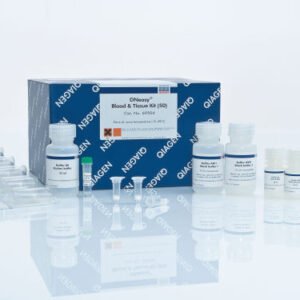
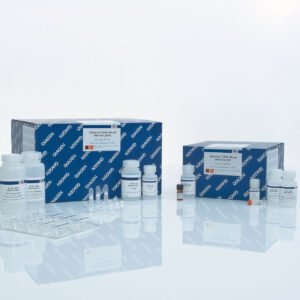
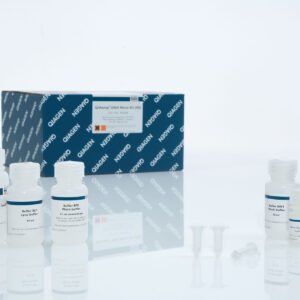
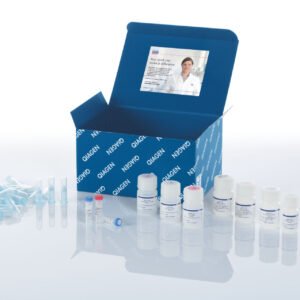
QIAGEN is particularly well known for silica membrane and magnetic bead-based nucleic acid purification. Product families such as QIAamp, DNeasy, RNeasy and QIAquick are widely used in research laboratories.
DNA Extraction and Purification
QIAGEN offers kits for isolating genomic, microbial, viral, circulating and cell-free DNA from many sample types.
Common starting materials include:
- Blood and plasma
- Cultured cells
- Animal tissues
- Plant tissues
- Bacteria and fungi
- Stool samples
- Saliva and buccal swabs
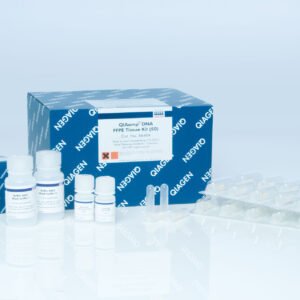
- Formalin-fixed tissue
- Environmental samples
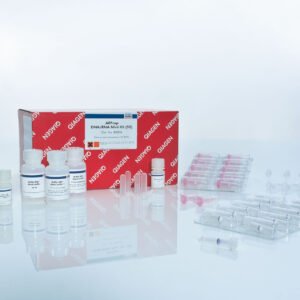
QIAamp kits provide spin-column and plate-based DNA purification workflows. DNeasy products cover animal, plant and microbial samples. Specialized kits address challenging samples and low-abundance nucleic acids.
Researchers should select a kit according to sample type, input amount and downstream application. DNA intended for PCR may have different purity requirements from DNA intended for sequencing.
RNA Isolation
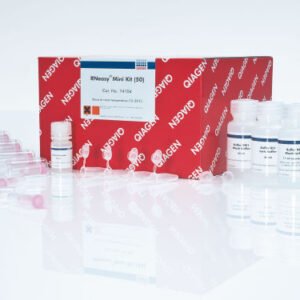
RNeasy products support the purification of total RNA, messenger RNA and other RNA fractions.
Researchers use these kits with cells, tissues, blood, plants, yeast and bacteria. Specialized workflows are available for fibrous tissue, lipid-rich samples and formalin-fixed material.
Efficient RNA purification requires rapid sample stabilization and effective RNase control. QIAGEN also offers products that protect RNA before extraction.
RNA yield alone does not confirm sample quality. Researchers should evaluate purity and integrity before reverse transcription, quantitative PCR or sequencing.
QIAquick DNA Cleanup
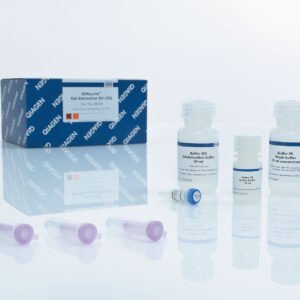
QIAquick products purify PCR products, enzymatic reactions and DNA fragments recovered from agarose gels.
These kits use silica membrane technology to remove primers, nucleotides, enzymes, salts and other contaminants. The purified DNA can support cloning, sequencing and additional enzymatic reactions.
Researchers should select the correct kit for direct PCR cleanup or gel extraction. Fragment size and elution volume can affect recovery.
Plasmid DNA Purification
QIAGEN supplies plasmid purification kits for small-, medium- and large-scale preparation.
QIAprep products support rapid plasmid minipreps for screening and routine molecular biology. Plasmid Plus and other larger-scale systems address applications that require greater yield or reduced endotoxin levels.
Common downstream uses include restriction digestion, cloning, sequencing and transfection.
For sensitive cell-based experiments, researchers should confirm whether the selected kit provides the required endotoxin specification.
PCR and Quantitative PCR
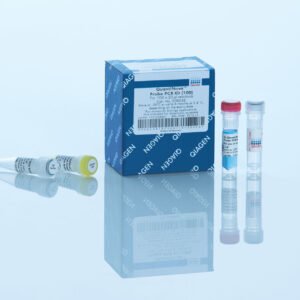
QIAGEN provides DNA polymerases, master mixes, buffers and assay reagents for endpoint PCR and real-time PCR.
The portfolio supports genotyping, gene expression analysis, pathogen research and mutation detection. Hot-start enzymes and optimized master mixes can improve specificity and simplify reaction setup.
Rotor-Gene instruments use rotary thermocycling for real-time PCR analysis. QIAquant systems provide additional formats for quantitative PCR workflows.
Researchers should select reagents according to template type, amplicon length, detection chemistry and instrument compatibility.
Reverse Transcription and Gene Expression
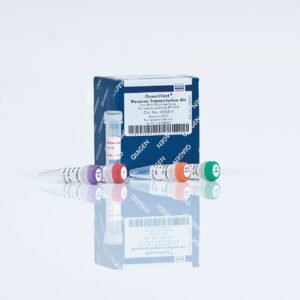
QIAGEN reverse transcription kits convert RNA into complementary DNA for downstream PCR analysis.
Products support first-strand synthesis, genomic DNA removal and one-step or two-step reverse transcription PCR. QuantiTect and related products can simplify gene expression workflows.
Reliable expression analysis starts with high-quality RNA. Researchers should also use suitable reference genes and no-reverse-transcriptase controls.
QIAcuity Digital PCR
The QIAcuity system provides nanoplate-based digital PCR for absolute nucleic acid quantification.
Digital PCR divides a reaction into many individual partitions. The instrument then counts positive and negative partitions to estimate target concentration.
Researchers use QIAcuity digital PCR for:
- Rare mutation detection
- Copy number analysis
- Gene expression
- Cell and gene therapy research
- Viral vector quantification
- Liquid biopsy research
- Microbial detection
- Residual DNA analysis
The QIAcuity workflow integrates partitioning, thermal cycling and imaging within one instrument. Different nanoplate formats support different throughput and sensitivity requirements.
Assay design remains important. Researchers should confirm primer and probe performance before using digital PCR for critical measurements.
Next-Generation Sequencing
QIAGEN offers products for sequencing library preparation, target enrichment and nucleic acid quality control.
QIAseq kits support applications such as:
- Targeted DNA sequencing
- RNA sequencing
- Microbial sequencing
- Cancer variant analysis
- Cell-free DNA research
- Unique molecular index workflows
- Single-cell research
- Viral and bacterial sequencing
Targeted panels can focus sequencing capacity on genes or genomic regions relevant to a research question. Unique molecular identifiers can help distinguish original molecules from amplification duplicates.
Researchers should verify sequencing platform compatibility, sample input and panel content before ordering.
Pyrosequencing
PyroMark systems use pyrosequencing technology for targeted sequence analysis and quantification.
Researchers can apply these systems to methylation analysis, genotyping and mutation testing. Pyrosequencing provides quantitative information over short, defined sequence regions.
Successful assays require suitable primer design and PCR optimization. QIAGEN provides instruments, reagents and software for the workflow.
Automated Sample Preparation
QIAGEN instruments automate nucleic acid purification and sample processing.
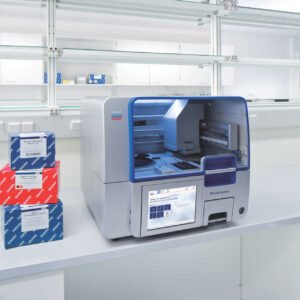
QIAcube Connect automates many spin-column procedures. This allows laboratories to use familiar QIAGEN kit chemistry with reduced manual handling.
QIAsymphony systems support automated sample preparation and assay setup in higher-throughput laboratories. EZ2 instruments use magnetic particle technology for automated purification.
Automation can improve consistency and reduce hands-on time. Laboratories should compare sample throughput, supported kits and instrument footprint before selecting a platform.
Tissue Homogenization
Effective disruption and homogenization help release nucleic acids from difficult samples.
TissueLyser instruments provide mechanical disruption using bead-based shaking. Researchers can process animal tissue, plants, bacteria and other sample types.
The correct beads, tubes and processing conditions depend on sample hardness and size. Excessive processing can heat samples and affect nucleic acid quality.
QIAxcel Capillary Electrophoresis
QIAxcel systems automate DNA and RNA fragment analysis using ready-to-use gel cartridges.
Researchers can use these instruments to assess PCR products, restriction fragments and nucleic acid quality. Automated separation reduces the manual steps associated with conventional slab gels.
The system can process multiple samples and generate digital results. Cartridge selection depends on the required resolution and fragment range.
Microbiome and Microbial Research
QIAGEN products support microbial DNA and RNA extraction from stool, tissue, environmental samples and other complex matrices.
Microbial samples often contain inhibitors that affect amplification and sequencing. Specialized purification kits help remove contaminants while recovering microbial nucleic acids.
Researchers can combine extraction products with PCR, digital PCR and next-generation sequencing workflows. Standardized sample processing improves comparability between microbiome studies.
Cancer and Liquid Biopsy Research
QIAGEN offers technologies for analyzing tumor tissue, circulating nucleic acids and cancer-associated variants.
Specialized extraction kits can recover nucleic acids from formalin-fixed tissue, plasma and other clinical research samples. PCR, digital PCR and sequencing products then support mutation and biomarker analysis.
Low-frequency variants require careful control of sample input and analytical sensitivity. Researchers should select methods according to the expected variant abundance.
Cell and Gene Therapy Research
QIAGEN products support vector characterization, gene expression analysis and molecular quality control during cell and gene therapy research.
Digital PCR can quantify viral vector genomes, residual DNA and copy number. Nucleic acid purification kits prepare samples for molecular testing.
Researchers should distinguish general research products from solutions designed for regulated manufacturing or clinical applications.
Human Identification and Forensic Testing
QIAGEN offers specialized sample preparation and molecular testing products for human identification and forensic laboratories.
These workflows may address difficult, degraded or low-input samples. Automated extraction can help improve laboratory consistency and traceability.
Product availability and regulatory status vary by market. Laboratories should verify local requirements before selecting a forensic system.
Bioinformatics and Data Interpretation
QIAGEN Digital Insights provides software and knowledge resources for genomic and biological data analysis.
CLC Genomics Workbench supports sequence analysis, assembly, variant analysis and transcriptomics. Ingenuity Pathway Analysis helps researchers interpret molecular datasets through pathways, biological functions and disease associations.
Other QIAGEN software products support variant interpretation, biomedical knowledge management and clinical research.
Software licensing, database content and deployment options should be reviewed separately from laboratory products.
Major QIAGEN Product Families
- QIAamp DNA extraction kits
- DNeasy DNA purification kits
- RNeasy RNA purification kits
- QIAquick PCR cleanup and gel extraction kits
- QIAprep plasmid purification kits
- QIAwave nucleic acid purification kits
- QIAcube Connect instruments
- QIAsymphony automation systems
- EZ2 nucleic acid purification instruments
- TissueLyser homogenizers
- Rotor-Gene real-time PCR systems
- QIAquant real-time PCR instruments
- QuantiTect PCR and reverse transcription products
- QIAcuity digital PCR systems
- QIAseq sequencing panels and library kits
- PyroMark pyrosequencing systems
- QIAxcel capillary electrophoresis systems
- CLC Genomics Workbench
- Ingenuity Pathway Analysis
Research Applications
QIAGEN products support research across:
- Molecular biology
- Genomics
- Gene expression
- Cancer research
- Liquid biopsy
- Microbiome research
- Infectious disease research
- Neuroscience
- Immunology
- Metabolism
- Cell and gene therapy
- Pharmaceutical development
- Agricultural research
- Environmental testing
- Human identification
- Bioinformatics
Selecting the Correct QIAGEN Product
Start with the sample type and target molecule. Define whether the experiment requires DNA, RNA, plasmid DNA, cell-free nucleic acids or microbial nucleic acids.
Next, consider sample input, required yield, purity and throughput. Manual spin columns may suit smaller projects, while magnetic bead systems and automated instruments may suit repeated or higher-volume workflows.
For PCR and sequencing, confirm instrument compatibility and sample input requirements. For automated systems, verify that the selected reagent kit supports the instrument model.
QIAGEN offers both research-use and diagnostic products. The intended use and regulatory status should be checked for each catalog number and destination country.
Source QIAGEN Products Through Biolterna
Biolterna helps laboratories and distributors source QIAGEN extraction kits, PCR reagents, sequencing products and laboratory instruments.
Provide the QIAGEN catalog number, product name, pack size and required quantity when requesting a quotation. For instrument consumables, include the instrument model and current configuration.
Biolterna can assist with product identification, availability checks and international shipping coordination. Temperature-sensitive reagents can be handled with suitable cold-chain packaging when required.