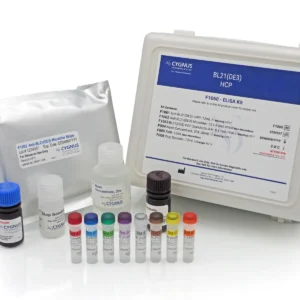
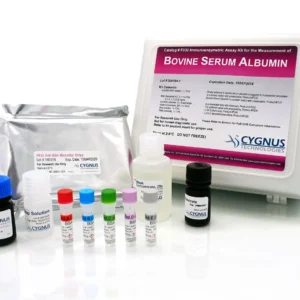
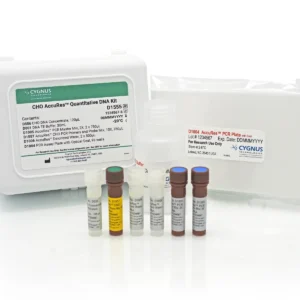
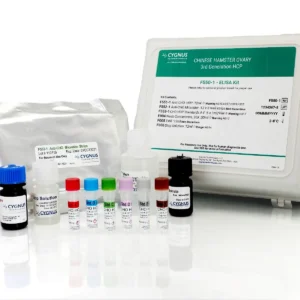
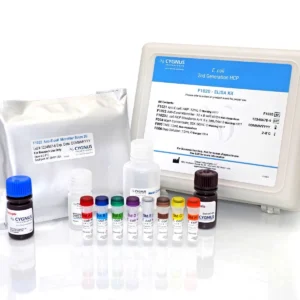
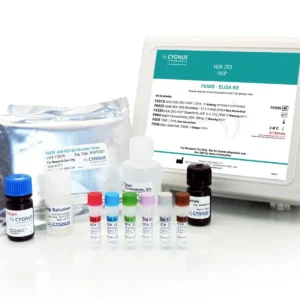
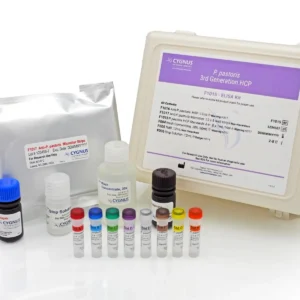
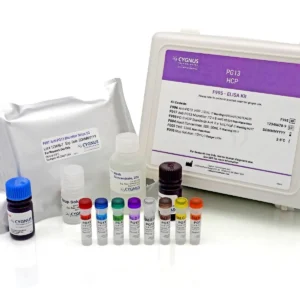
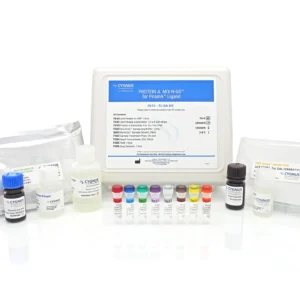
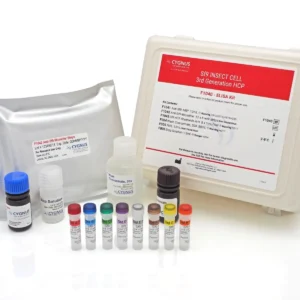
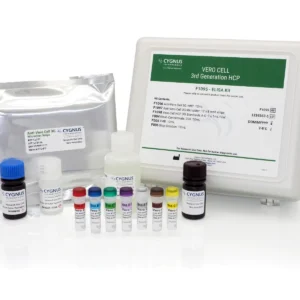
Cygnus Technologies develops analytical products and services for detecting process-related impurities during biological drug manufacturing. The company is particularly recognized for host cell protein ELISA kits, residual DNA assays and methods for measuring Protein A and other purification-process contaminants.
Its products support process development, purification optimization, clinical manufacturing, method qualification and routine quality control of recombinant proteins, monoclonal antibodies, vaccines, cell and gene therapies and other biological products.
Host Cell Protein Detection
Host cell proteins, commonly abbreviated as HCPs, are proteins produced by the host cells used to manufacture a recombinant biological product.
Although downstream purification removes most of these proteins, small amounts may remain in the final product. Monitoring HCP levels is therefore an important part of evaluating bioprocess purity and consistency.
Cygnus Technologies provides HCP ELISA kits for multiple expression and production platforms, including:
- Chinese hamster ovary cells
- Escherichia coli
- HEK293 cells
- NS/0 cells
- SP2/0 cells
- Vero cells
- Pichia yeast
- Saccharomyces cerevisiae
- Insect cells
- Other microbial and mammalian systems
The correct kit should be selected according to the actual host-cell line and process used to produce the biological product.
CHO Host Cell Protein ELISA Kits
Chinese hamster ovary cells are widely used for manufacturing monoclonal antibodies and recombinant therapeutic proteins. Cygnus offers several generations and formats of CHO HCP ELISA kits.
These kits are used to monitor residual CHO proteins in:
- Process-development samples
- Purification fractions
- Drug substance
- Drug product
- Manufacturing validation samples
- Routine quality-control testing
Researchers should not assume that every CHO HCP kit is interchangeable. Differences in host-cell strain, culture conditions, harvest procedures and process platform can influence the HCP population.
Kit selection should be supported by dilutional linearity, spike-recovery and antibody-coverage studies.
Generic and Process-Specific HCP Assays
A generic HCP ELISA uses antibodies developed against a broad HCP preparation from a commonly used expression platform. It can provide a practical method during early process development and may remain suitable throughout the product lifecycle when its performance is properly demonstrated.
A process-specific assay uses antibodies generated against HCP material from the customer’s own manufacturing process.
A process-specific assay may be considered when:
- The generic assay has insufficient antibody coverage
- The production process contains unusual HCP populations
- Certain HCPs persist through purification
- The biological product interferes with the generic assay
- Regulatory or internal requirements call for a process-specific method
The decision should be based on analytical evidence rather than the development stage alone.
HCP Antibodies and Western Blot Reagents
Cygnus supplies antibodies and supporting products for detecting host cell proteins by Western blot and other analytical methods.
These reagents may support:
- HCP antibody characterization
- Comparison of process fractions
- Identification of immunoreactive proteins
- Orthogonal confirmation of ELISA results
- Evaluation of purification performance
- Development of customized assays
Western blotting provides information about the molecular-weight distribution of detected proteins, but it is generally less quantitative than a validated ELISA or mass spectrometry method.
Antibody Coverage Analysis
An HCP ELISA can detect only the proteins recognized by its antibody reagent. Antibody-coverage analysis helps determine whether the antibody population adequately recognizes the HCPs associated with a particular manufacturing process.
Cygnus provides coverage analysis using approaches such as:
- Two-dimensional electrophoresis
- Western blotting
- Antibody Affinity Extraction
- Mass spectrometry
- Orthogonal comparison of HCP preparations
Traditional 2D Western blot coverage can provide useful information, but proteins can overlap on a gel and staining sensitivity may vary.
Mass spectrometry-based approaches can provide more detailed information about which individual HCPs are recognized.
Antibody Affinity Extraction
Antibody Affinity Extraction, or AAE, is used to evaluate the proteins captured by an HCP antibody preparation.
In this approach, antibodies are immobilized and used to extract immunoreactive proteins from an HCP sample. Captured and non-captured proteins can then be investigated using mass spectrometry or other analytical methods.
AAE can help researchers:
- Evaluate HCP antibody coverage
- Identify proteins not recognized by an assay
- Compare generic and process-specific antibodies
- Investigate individual high-risk HCPs
- Support assay suitability assessments
Coverage results depend on the HCP sample used for testing. The sample should represent the manufacturing process as closely as practical.
Mass Spectrometry HCP Analysis
Cygnus offers mass spectrometry services for identifying and quantifying individual host cell proteins.
LC-MS analysis can support:
- Identification of residual HCPs
- Purification-process characterization
- Comparison of manufacturing processes
- Investigation of problematic proteins
- Orthogonal assessment of ELISA results
- Evaluation of product quality
Mass spectrometry and ELISA provide complementary information. ELISA is well suited to routine high-throughput quantification, while mass spectrometry can identify individual proteins and reveal changes in the impurity profile.
A protein not detected by mass spectrometry is not necessarily absent. Sample preparation, abundance, ionization and the biological product matrix can affect detection.
Residual Host Cell DNA Kits
Cygnus AccuRes products support the extraction and quantification of residual host cell DNA.
Residual DNA testing is relevant to biological products manufactured using mammalian, bacterial, yeast and other expression systems.
A typical workflow includes:
- Sample preparation
- DNA extraction
- Removal of interfering proteins
- Real-time PCR amplification
- Quantitative comparison with DNA standards
Researchers should choose a kit compatible with the host species and available real-time PCR platform.
The extraction step is critical because the biological product, formulation buffer and DNA fragment size can affect recovery.
qPCR-Based Residual DNA Measurement
Real-time PCR provides sensitive detection of host cell DNA by amplifying selected genomic sequences.
Important considerations include:
- Host-cell species
- Target sequence
- DNA extraction efficiency
- PCR inhibition
- Standard preparation
- DNA fragment size
- Instrument compatibility
- Sample volume
Spike-recovery experiments can help determine whether the sample matrix interferes with extraction or amplification.
The assay should be evaluated with representative process samples rather than buffer alone.
Protein A Impurity ELISA Kits
Protein A is widely used to purify monoclonal antibodies and Fc-containing recombinant proteins. Small amounts of Protein A can leach from the chromatography resin and remain in the purified product.
Cygnus Protein A ELISA kits are designed to quantify residual Protein A from natural and recombinant Protein A purification systems.
Applications include:
- Monoclonal antibody manufacturing
- Fc-fusion protein production
- Affinity purification development
- Resin comparison
- Purification-process validation
- Product release testing
The exact Protein A construct used in the chromatography resin should be considered when selecting an assay.
Mix-N-Go Protein A Assays
Mix-N-Go assay formats are designed to simplify sample preparation and reduce assay time for residual Protein A measurement.
These assays may support multiple natural and recombinant Protein A constructs. However, binding between residual Protein A and the therapeutic antibody can affect detection.
Sample dissociation conditions should release Protein A from antibody complexes without damaging assay performance. The manufacturer’s preparation procedure should be followed carefully.
Protein L and Other Process Impurities
Cygnus also supplies ELISA products for detecting Protein L and other materials used during biological-product purification and manufacturing.
Potential process-related impurities include:
- Protein L
- Bovine serum albumin
- Human serum albumin
- Insulin
- Lysozyme
- Nucleases
- Proteases
- Affinity ligands
- Cell-culture additives
The required impurity tests depend on the expression system, raw materials and downstream purification process.
A product should be selected based on the exact analyte and sample matrix rather than the general bioprocess category.
Bioprocess Impurity ELISA Kits
Ready-to-use ELISA kits provide a standardized method for quantifying selected process impurities.
When evaluating a kit, laboratories should review:
- Detection range
- Sensitivity
- Sample dilution requirements
- Precision
- Spike recovery
- Dilutional linearity
- Cross-reactivity
- Assay duration
- Required instrumentation
Samples with impurity concentrations above the calibration range must be diluted. Excessive dilution, however, can move the result below the assay’s reliable quantification limit.
Viral Clearance Prediction Kits
Cygnus offers tools for evaluating the performance of downstream purification steps in viral clearance.
These products may use non-infectious or low-biosafety-level model particles to support early evaluation of purification conditions.
Applications include:
- Chromatography resin screening
- Filter evaluation
- Process-development studies
- Viral clearance prediction
- Optimization before formal validation
Prediction studies do not replace formal viral clearance validation required for regulatory submissions. They can help researchers select promising process conditions before beginning more complex spiking studies.
Retrovirus-Like Particle Assays
Retrovirus-like particles can serve as model impurities for assessing the capacity of purification processes to remove or inactivate viral particles.
Relevant applications include products manufactured in cell substrates capable of producing endogenous retrovirus-like particles.
Researchers should confirm:
- Model-particle type
- Detection method
- Sample compatibility
- Purification step being evaluated
- Assay sensitivity
- Relationship to the formal viral clearance strategy
Minute Virus of Mice Studies
Minute virus of mice is commonly used as a small, resistant model virus during viral clearance studies.
Cygnus products and services can support early assessment of purification steps such as:
- Virus filtration
- Chromatography
- Low-pH treatment
- Other viral reduction operations
Formal clearance validation should be designed according to the biological product, manufacturing process and applicable regulatory expectations.
HCP Assay Qualification
Before an HCP ELISA is used for manufacturing decisions, laboratories should demonstrate that the assay is suitable for the specific product and process.
Important qualification studies include:
- Dilutional linearity
- Spike and recovery
- Precision
- Repeatability
- Intermediate precision
- Assay range
- Robustness
- Sample stability
- Antibody coverage
Acceptable performance criteria should be defined before testing.
A sample can produce acceptable spike recovery at one dilution but fail at another, so several dilutions may need to be evaluated.
Dilutional Linearity
Dilutional linearity evaluates whether measured HCP concentration remains proportional as the sample is diluted.
Nonlinear results may indicate:
- Product interference
- HCP–product interactions
- Insufficient antibody coverage
- Concentrations outside the assay range
- Matrix effects
- Sample-preparation problems
Selecting a dilution solely because it produces a result within the standard curve is not sufficient. The dilution must also demonstrate acceptable analytical behavior.
Spike-and-Recovery Testing
Spike recovery evaluates whether a known amount of HCP standard can be detected after it is added to a process sample.
Poor recovery may indicate matrix interference or differences between the kit standard and the actual process HCP population.
Because the spiked standard may not behave exactly like naturally occurring HCPs, spike recovery should be interpreted together with dilutional linearity and coverage analysis.
Custom HCP Antibody Development
Cygnus develops custom antibodies against process-specific HCP preparations.
A custom project may include:
- HCP antigen preparation
- Animal immunization
- Antibody production
- Affinity purification
- Antibody characterization
- Coverage analysis
- Assay development
- Reference-standard preparation
- Scale-up manufacturing
The antigen should represent the host-cell process while excluding or minimizing the therapeutic product.
Changes in cell line, culture medium or harvest conditions may alter the HCP profile and affect the relevance of an existing process-specific assay.
Custom HCP ELISA Development
Cygnus provides custom ELISA development for manufacturers requiring a process-specific impurity method.
Development may include:
- Antibody generation
- Capture and detection antibody preparation
- Standard qualification
- Assay optimization
- Matrix-interference testing
- Dilutional linearity
- Spike recovery
- Precision testing
- Method transfer support
Custom assay development requires representative HCP antigen, process samples and clear analytical requirements.
Sample Testing Services
Cygnus performs sample analysis for organizations that do not have an established internal method or need independent analytical support.
Services may include:
- HCP ELISA testing
- Residual impurity testing
- Assay qualification
- Method troubleshooting
- Coverage analysis
- HCP identification
- HCP quantification
- Viral clearance studies
Before submitting samples, customers should provide information about the expression system, product concentration, formulation, expected impurity range and sample storage requirements.
Applications Across Biologic Development
Cygnus products can be used throughout the biological-product lifecycle:
- Cell-line and process development
- Upstream process optimization
- Downstream purification development
- Preclinical manufacturing
- Clinical manufacturing
- Process validation
- Regulatory submission support
- Commercial quality control
- Product release testing
- Manufacturing-change assessment
The analytical method may evolve as the process matures. A generic HCP ELISA can be suitable when performance is demonstrated, while some programs may ultimately require a process-specific assay.
Biological Products Supported
Cygnus Technologies products and services are relevant to:
- Monoclonal antibodies
- Recombinant proteins
- Fc-fusion proteins
- Vaccines
- Viral vectors
- Cell and gene therapies
- Plasma-derived products
- Biosimilars
- Enzyme replacement products
- Other biological therapeutics
Each product type presents different sample-matrix and impurity challenges.
Selecting Cygnus Products
Product selection should begin with the manufacturing host and the impurity that needs to be measured.
For an HCP assay, confirm:
- Host-cell species and strain
- Cell-culture conditions
- Product type
- Sample matrix
- Expected HCP concentration
- Required analytical range
- Assay qualification status
- Available antibody-coverage data
For residual DNA testing, confirm the host species, extraction method and real-time PCR instrument.
For Protein A testing, identify the chromatography ligand or recombinant Protein A construct used in the process.
The complete catalog number should be included when requesting a quotation because Cygnus may offer several generations or formats for the same impurity category.
Some Cygnus products may be used within regulated biopharmaceutical manufacturing workflows, but laboratories remain responsible for method qualification or validation according to their intended use and applicable requirements.